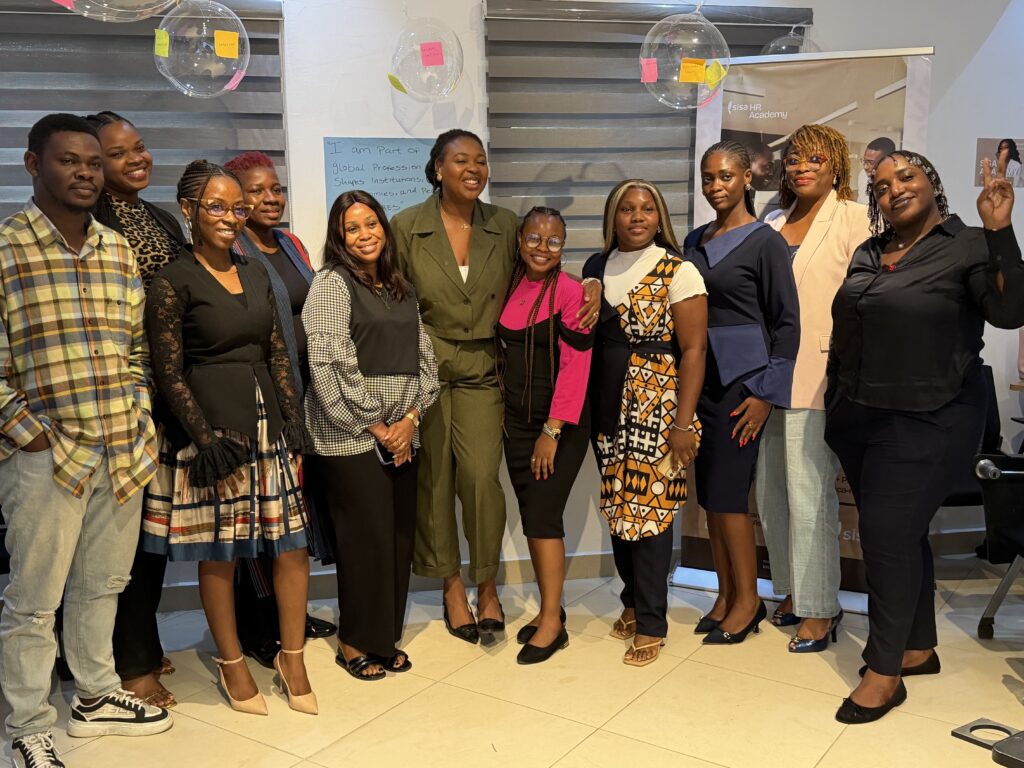
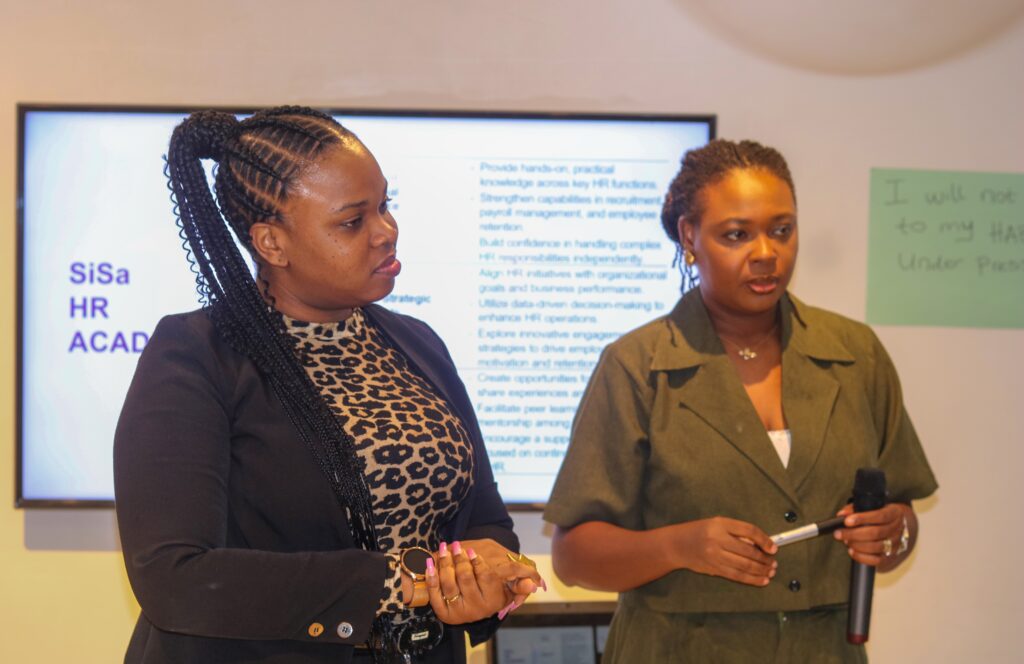
Not the usual conference room scent of stale air conditioning and leftover coffee. This room had intention. A scent consultant had been brought in deliberately, crafting an olfactory environment designed to open minds before a single word was spoken.
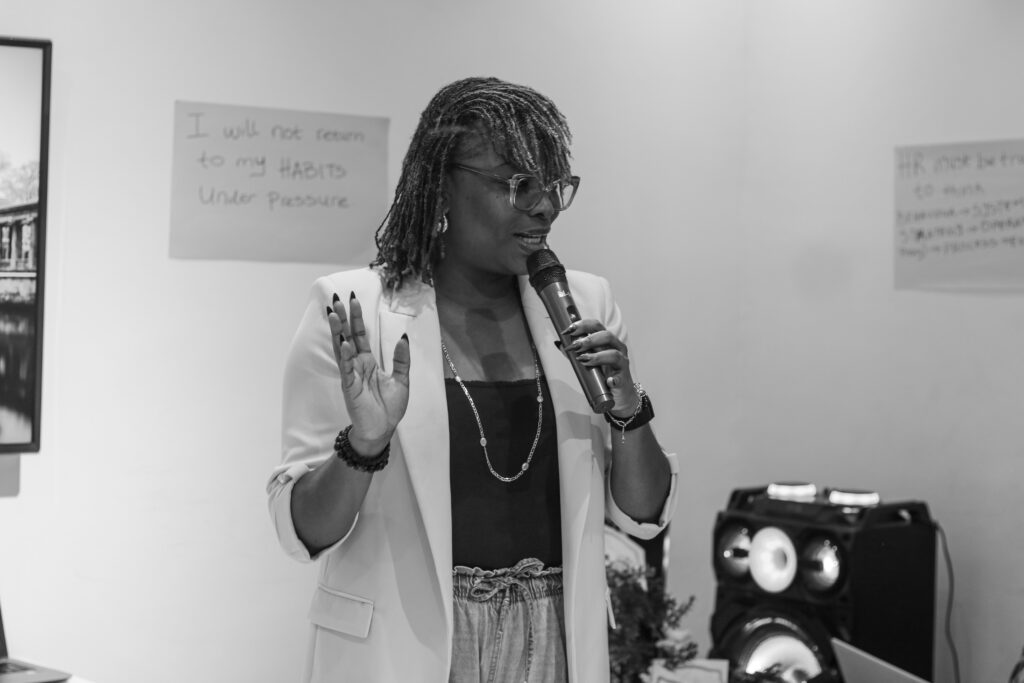
On the walls, words weren’t just printed they were positioned, strategically placed phrases designed to interrupt old patterns of thinking and install new ones. Mindset shifts embedded in the architecture itself. Simple placement to drive adaptive behavior.
This wasn’t a training session.
This was the birth of something Nigeria’s HR profession has been waiting for.
Welcome to the SiSa Academy.
The Room Was Ready. Were They?
When the first cohort of HR professionals walked into the room on January 21st, they carried the weight that so many Nigerian HR practitioners carry: the fatigue of being misunderstood, undervalued, and trapped in administrative purgatory.
They had been called “admin.” They had been treated as messengers. They had watched founders make reckless people decisions and been blamed when things fell apart. They had written policies that no one followed. They had sat in meetings where their voices didn’t carry weight. Saddled with the responsibility of HR admin, ops and strategy all at once.
Some came skeptical. Some came desperate. All of them came ready, whether they knew it or not, because when you walk into a room that has been designed, not just decorated, something shifts before the teaching even begins.
HR as an Environment of Influence
The central theme of the day wasn’t a buzzword. It wasn’t borrowed from Silicon Valley or copied from a British HR manual.
HR as an Environment of Influence.
Not HR as policy enforcement. Not HR as employee support. Not HR as conflict mediation.
HR as the architect of the physical, psychological and intellectual conditions under which humans either thrive or deteriorate.
This reframe landed like thunder in the room.
One participant said it out loud during a breakout: “I’ve been trying to change people. I should have been changing the system.” Another said, you just gave me permission.
What Happened in That Room
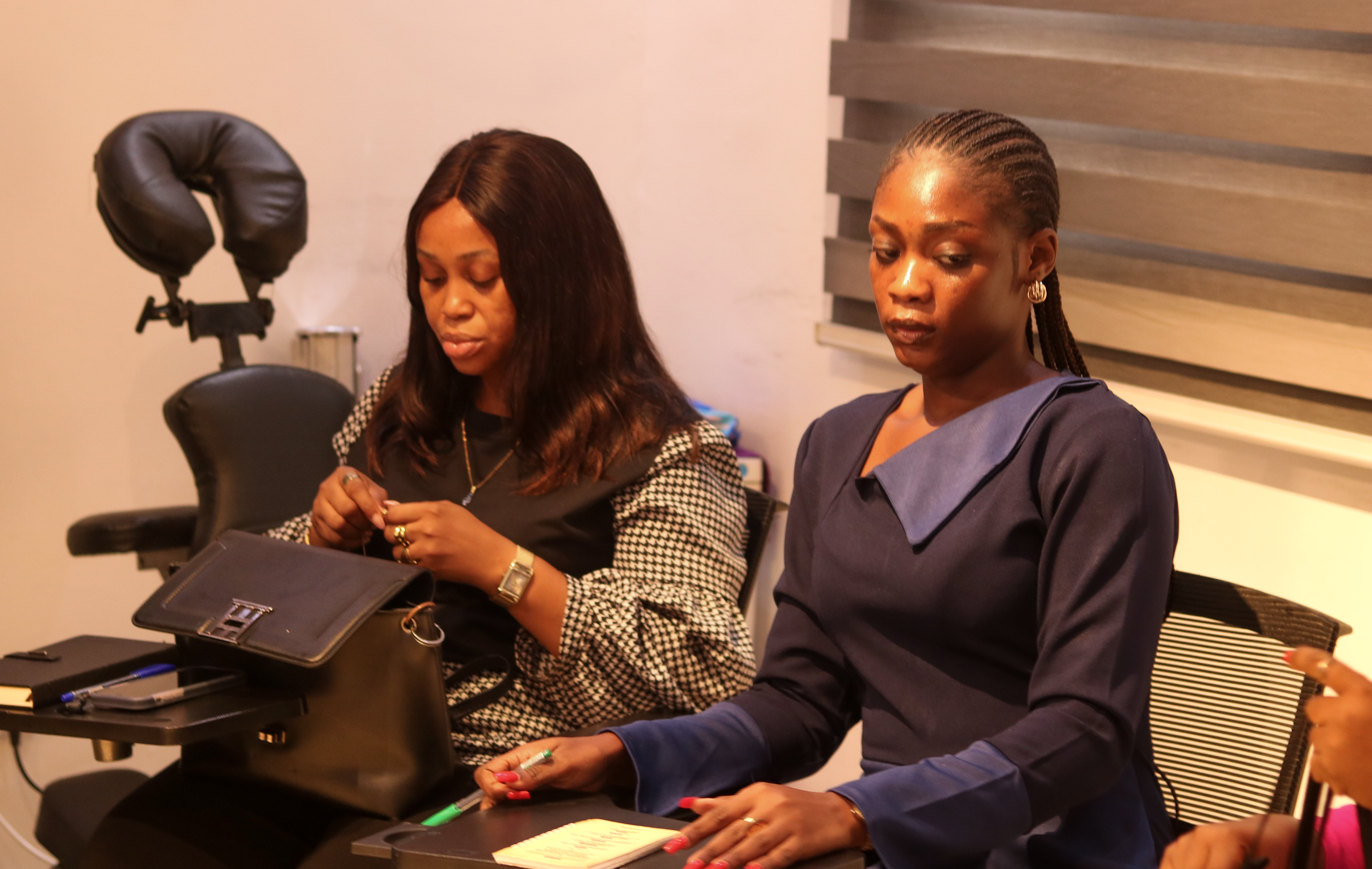
Over the course of the day, participants didn’t just listen. They worked.
1. They Mapped their influences
Using a diagnostic framework, each person identified:
• Where they currently have influence in their organization
• Where they should have influence but don’t
• What’s blocking them
• What one system change would amplify their impact 10x
For many, this was the first time they saw themselves as system designers rather than service providers.
2. They Learned to Leverage Data, Not Dashboards, But Decisions
We didn’t teach them how to build pretty HR dashboards.
We taught them how to ask the questions that unlock organizational intelligence:
• Why are people really leaving?
• Where does performance break down?
• What conditions produce high output vs. burnout?
• What’s being tolerated that shouldn’t be?
In Nigeria, where HRIS systems are often absent and data is messy, this isn’t about technology. It’s about investigative intelligence.
One participant realized she had been collecting the wrong data for two years. By the end of the session, she had redesigned her entire performance feedback approach.
3. They Named the Power Tussles
This is where it got real.
In Nigerian organizations, power doesn’t live in org charts. It lives in:
• Founder proximity
• Tribal affiliations
• Family connections
• Seniority and age
• Who controls money
• Who controls information
• Demographic wars
• Environmental nurturing
• Founders Bias
• Individual bias
• Non systemized decision making
We didn’t avoid it. We named it.
Participants mapped the actual power structure of their organizations, not the official one, and identified:
• Who influences key decisions
• What’s being tolerated because of power protection
• Where HR’s voice is being neutralized
• How to navigate power without losing integrity or usurping authority
The honesty in the room was electric.
4. They Learned the Formula: Strategic Priorities → Bottlenecks → Simple Rules
As well as the DRISO method for solving problems. One of the most practical frameworks we installed:
For every HR challenge:
1. Understand the strategic priorities — What is the business actually trying to win at right now?
2. Locate the bottlenecks — Where is human behavior, systemic, people, data, structure, or culture blocking that win?
3. Create simple rules — What’s the smallest rule change that removes the bottleneck?
This is system design, not policy writing.
Example from the room:
• Priority: Scale sales team from 10 to 50 people in 6 months
• Bottleneck: Founder interviews every candidate personally (11-hour weeks
spent interviewing)
• Simple Rule: Founder only interviews final 2 candidates after VP Sales + HR screen
One rule. Bottleneck removed. Founder gets time back. Hiring accelerates.
That’s the kind of thinking we installed.
They stopped trying to fix people and started redesigning systems
Perhaps the most profound shift of the day was this realization:
When employees misbehave, the first question is not “What’s wrong with them?” The first question is: “What system made that behavior logical?”
People adapt to the rules spoken and unspoken of the system.
If favoritism is rewarded, people will seek favor. If results don’t matter, people won’t produce results. If speaking up is punished, people will stay silent.
HR’s job is not to control humans. HR’s job is to design systems where good behavior is the easiest option.
By the end of the day, participants had:
• Diagnosed one cultural problem in their organization using a system lens
• Identified what’s being tolerated that destroys culture
• Designed one simple rule to shift behavior
The Vision: Monthly Cohorts, Future Policy Makers
Here’s what excites us most.
This isn’t a one-time event. This is Cohort 1.
Every month, we will gather a new group of HR professionals, business leaders, and founders who are ready to reimagine what HR can be in Africa.
We are not just training HR practitioners.
We’re building the future policy makers, organizational architects, and culture designers who will shape how African businesses scale without breaking their people.
Imagine:
• 12 cohorts a year
• 240+ HR leaders transformed annually
• A growing alumni network of system-thinkers embedded across industries
• A movement of HR professionals who refuse to be “admin” and demand to be architects
This is how professions are elevated. This is how industries are transformed. This is how nations build institutional capacity.
To read more articles like this visit our sub stack page by clicking the button below….. Thanks for making SiSa Academy possible